


How Neighbors Were Blocked, Land Was Altered Without Permits, and the Rules Quietly Changed

Environmental protections only work if they are applied consistently. Wetlands either matter, or they don’t. When the same land is regulated one way for one owner and another way after ownership changes — especially when unpermitted work has already occurred — the integrity of the regulatory system itself comes into question.
This article examines what happened at 9524 Freedom Place, Blaine, Washington, where wetlands were used to block a family from building, but later disregarded after the property was altered without permits and acquired by the very attorney who had opposed the original project.
This is not a criminal verdict. It is a record-based account of documented statements, regulatory decisions, and outcomes that raise serious concerns about selective enforcement and regulatory consistency.
The Property and the Players
The property at 9524 Freedom Place was originally owned by the Andes family. In 2021, it was purchased by Steven Shropshire, acting through Shut the Front Door, LLC.
Steven Shropshire is not merely a neighboring property owner.
He is a licensed attorney.
That distinction matters because attorneys are held to heightened standards of candor and accuracy when making representations to regulatory bodies and tribunals.
Those standards are central to this case.
How the Andes Were Blocked
Before Steven Shropshire owned the property, the Andes family attempted to build a home on land they owned. Their proposal was met with sustained legal opposition led by Shropshire.
In formal written submissions to Whatcom County and the Hearing Examiner, Shropshire relied on a 2018 Critical Areas Assessment documenting wetlands and buffers on the property. He argued that building in the proposed location would cause “significant adverse impacts to critical areas and associated buffers.”
These were not casual objections. They were legal arguments, submitted by an attorney to a quasi-judicial tribunal, for the express purpose of influencing a regulatory decision.
They worked.
The County treated the wetlands as a hard stop. The Andes were blocked from building. After years of delay, expense, and litigation, they sold the property.
At that point, nothing about the land itself had changed.
Statements to Tribunals — and Actual Knowledge
The 2018 Critical Areas Assessment was not obscure or disputed. It was central to the dispute and repeatedly cited — including by Steven Shropshire himself.
As an attorney, Shropshire made affirmative representations to regulatory authorities, asserting that wetlands existed on the property and that development in the contested area was environmentally harmful and inappropriate.
Those statements establish actual knowledge — not speculation — of the wetland’s presence and regulatory significance.
Attorneys are expected to understand the factual and legal implications of the positions they advance before tribunals. Representations made to regulatory bodies do not lose their relevance simply because ownership later changes.
At the time, the wetlands mattered — and the County agreed.
Ownership Changes — and the Rules Change With It
In 2021, Steven Shropshire purchased the property he had previously argued could not be developed as proposed.
What followed was not a continuation of strict wetland protection.
Between 2021 and 2023, the property was cleared, graded, ditched, and filled, including areas previously identified as wetlands and buffers. No Critical Areas review was obtained before this work occurred, a step routinely required of property owners when wetlands are present. No permits authorizing that work were issued at the time.
According to sworn declarations from neighboring property owners and confirmed by communications with County staff, this land disturbance was unpermitted and constituted a code violation.
In plain terms, the wetlands that had blocked the Andes were altered without permission and without prior regulatory review.
Same Development, Different Owner
After the land had been altered, Shropshire moved forward with development plans that closely resembled what the Andes had originally sought — including building in nearly the same area he had previously argued must remain protected.
This time, the outcome was different.
The environmental review was conducted under post-alteration conditions, not the documented pre-disturbance baseline that had been used to stop the Andes’ project. The earlier Critical
Areas Assessment — the same document relied upon to block development — was known to the County, but not used.
From Blocking to Defending
When the Andes attempted to build, Whatcom County strictly enforced wetland protections.
When neighbors later raised concerns about unpermitted land disturbance after ownership changed, the County did not pursue enforcement. Instead, it evaluated the site based on its altered condition and issued permits allowing development to proceed.
In subsequent appeals, the County defended those approvals — not by disputing that unpermitted work had occurred, but by emphasizing procedural limits on review and declining to assess or remedy the prior disturbance.
The Hearing Examiner made clear that even if illegal filling had occurred, the scope of review was limited to whether the County followed its process — not whether wetlands had been unlawfully altered or should be restored.
The result was a quiet but consequential reversal: wetlands that once blocked development no longer did so after they had been altered without authorization.
A Tale of Two Wetland Reviews
WHISPER LAKE DEVELOPMENT
The County’s approach becomes even harder to reconcile with other recent cases.
In 2023, after all local permits had already been approved for the Whisper Lake development near Blaine, Whatcom County staff, spearheaded by everyone's favorite corrupt Whatcom County Natural Resources Planner Matt Mahaffie, requested a secondary review by the Washington State Department of Ecology. Ecology conducted an independent site visit and concluded, after multiple prior wetlands studies showed none, that wetlands were present.
That post-approval review resulted in substantial changes, including a significant reduction in allowed density. From 108 lots to just over 80!
In other words, when the County sought a second look, wetlands mattered — even after permits were issued.
By contrast, at 9524 Freedom Place, where land was altered before review and without permits, the County declined to seek heightened scrutiny, declined to rely on a known pre-disturbance baseline, and defended approvals based on post-alteration conditions.
The difference between the two cases is not timing. It is the purest example of regulatory hypocrisy.
Why the Unpermitted Work Cannot Be Ignored
Critical Areas regulations exist to prevent wetlands from being altered before review, not to adapt to alterations after the fact.
Here, the County had access to a pre-disturbance baseline. It had been cited in earlier proceedings. It was known to the applicant. It was known to the staff. And it was essential to determine whether a wetland existed prior to disturbance.
Nevertheless, the County chose not to use it.
By approving development based on post-alteration conditions — without requiring enforcement or restoration — the County’s actions had the practical effect of legitimizing unpermitted wetland fill.
The Appearance of Selective Enforcement
Same land. Same wetlands. Different owner. Different outcome.
That sequence creates the appearance of selective enforcement — not because of speculation about motive, but because of documented differences in how the rules were applied.
Environmental protections that apply only until they become inconvenient are not protections at all.
Why This Matters
Wetlands do not easily recover. Neither does public trust.
When regulatory systems block compliance but adapt to violations, they quietly reward noncompliance. When neighbors who follow the rules are stopped, while unpermitted alteration is later accepted as the new baseline, confidence in the system erodes.
This case deserves scrutiny not because guilt has been declared, but because consistency has not been demonstrated.
Do environmental rules protect the environment...or are they used to give increasing power to unelected regulatory bodies? Or maybe to merely document what was lost after the fact?
Actual Knowledge & Candor to Regulatory Bodies
Across regulatory systems, certain principles apply regardless of the specific agency involved.
Actual knowledge refers to documented awareness of relevant facts — not what someone claims to have learned later. When an individual has previously made formal representations about environmental conditions, those statements establish awareness that cannot be undone by subsequent events.
Candor to regulatory bodies means that representations made to influence one regulatory decision remain relevant in later proceedings, even if ownership changes or new applications are filed. This expectation applies broadly — not only to courts, but to administrative agencies, hearing examiners, and environmental regulators.
When an attorney submits written arguments to a tribunal asserting that wetlands exist and must be protected, those statements carry professional and ethical weight. They are not merely advocacy in the moment; they become part of the regulatory record.
Consistency matters because regulatory systems rely on trust. When positions taken before one authority are abandoned or contradicted before another — without acknowledgment or explanation — the integrity of the process suffers.
This case raises questions not about hindsight, but about whether prior knowledge and representations were given appropriate weight in later decisions.
And whether an attorney knowingly deceived a tribunal.
More Corruption
If this is your first article from us regarding the corrupt Whatcom County Planning Department read more by clicking the button below.
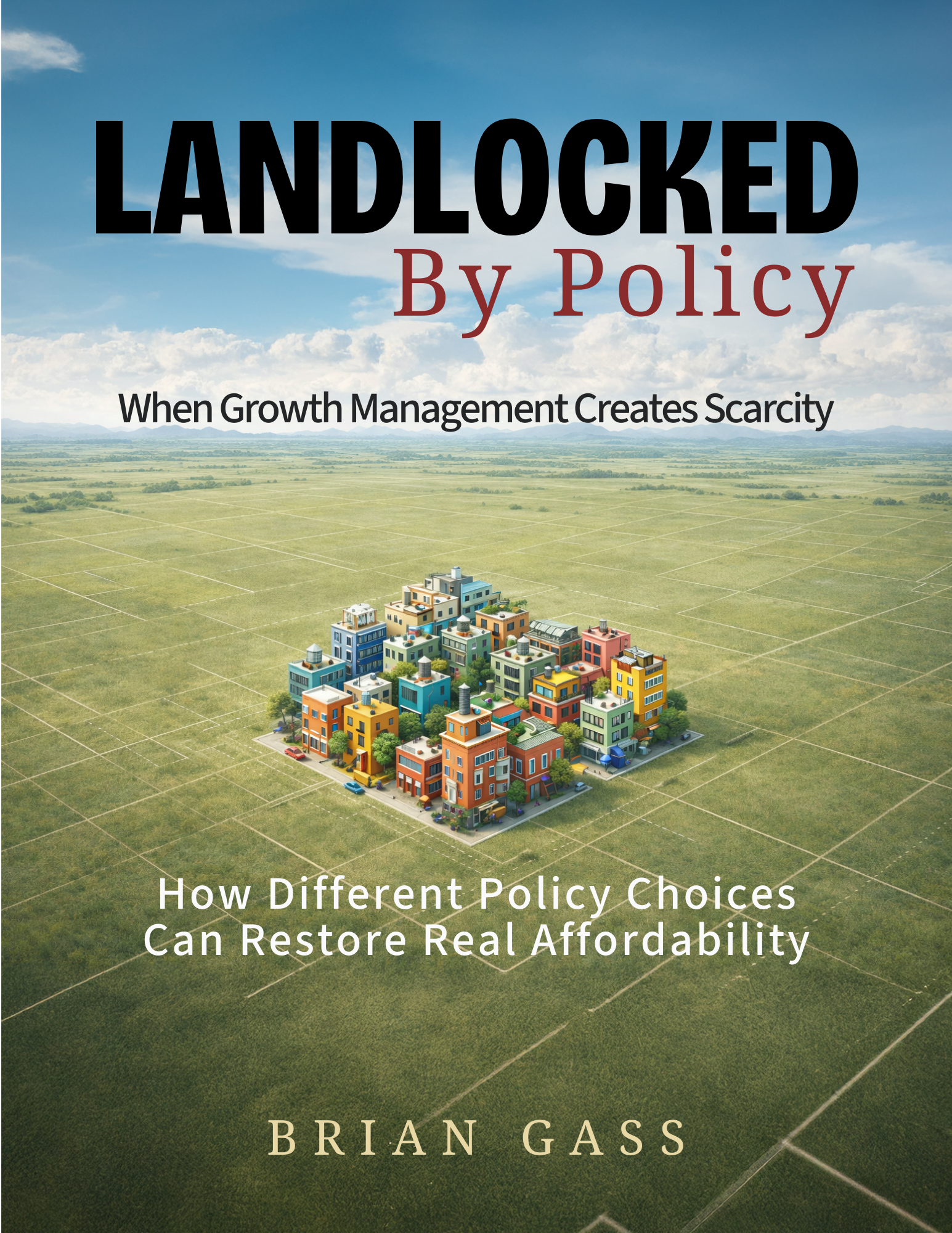
Reserve your FREE copy!
Washington State has some of the strictest land-use policies in the country. What used to buy a starter home at 3-4x median income is now 8-10x!
First-time home buyers have been squeezed out of opportunity, wealth creation, stability, and choice.
Discover exactly how policy created this crisis—and the breakthrough solution that restores affordability without subsidies or disruption.
For the full evidentiary record — including the “Magic Memo” that appeared in PDS files with no author, the Brissenden dual-employment problem, and the institutional response — see our Statement of Investigative Findings.

Comments